Science fiction is the literature of consequences. A good science-fiction story asks one question about a changed world, what if?, and then refuses to stop at the first answer. What if people could photosynthesize? Then lunch becomes optional. Then farming collapses. Then sunlight becomes property, and someone starts selling shade.
This guide is for new science-fiction writers, from teenagers writing their first story to adults trying the genre after years of reading it, and for teachers running a genre unit in grades 7–12. It walks through a working method: start from one “what if,” follow its consequences, decide how hard your science will be, research efficiently, and get the information into the story without stopping it dead. It ends with a few verified places where young writers can enter science-fiction work.
Start with one “what if”
Most strong science-fiction premises change one thing about the world and keep the rest recognizable. That single change is your engine. Try to phrase it in one sentence, beginning “What if…”
- What if a colony ship arrived to find its destination already settled by people who left Earth later, on faster ships?
- What if memories could be copied, but each copy faded slightly?
- What if a city’s weather were decided by vote?
Notice that none of these mentions a hero yet. The premise is the world’s question; the character comes next. Ask who suffers most, or gains most, from the change. That person is often your protagonist. If you need a spark, the Story Idea Generator and the Sci-Fi World Generator can throw out premises to react against.
Follow the consequences
The difference between a gimmick and a world is how far you follow the change. A useful exercise is a consequence ladder: write the change, then ask “and so?” at least three times, moving from technology to daily life to society.
| Rung | Question | Example: memories can be copied |
|---|---|---|
| 1. The change | What is new? | A clinic can copy a memory into another person |
| 2. First effect | Who uses it, and how? | Grieving families buy memories of lost relatives |
| 3. Second effect | What industry or habit grows up around it? | A black market sells famous people’s memories |
| 4. Third effect | What does society now fear, value or ban? | Courts debate whether a copied memory counts as testimony |
| 5. The story | Who is caught in the middle? | A juror realizes her own memory of the crime is a copy |
The best story ideas often live on rung four or five, where the premise touches people’s choices. Our guide to building a fictional world takes this further.
Hard and soft science fiction
Readers and writers often sort science fiction by how closely it sticks to known science.
Hard SF. The Encyclopedia of Science Fiction (SFE) records that the term was coined by P. Schuyler Miller in the magazine Astounding in November 1957. SFE describes hard SF as using established or carefully extrapolated science as its backbone, and suggests that what matters most is not detailed science on every page but respect for the scientific spirit: natural explanations rather than supernatural ones.
Soft SF. SFE calls this a “not very precise” term, generally applied either to science fiction about the so-called soft sciences or to science fiction that emphasizes human feelings over recognizable science. It also notes the term is rarely used in the twenty-first century.
In practice, think of a spectrum rather than two boxes. A story about the engineering of a Mars habitat sits near the hard end; a story about how a society changes when everyone can hear each other’s thoughts sits nearer the soft end. Neither is better. Choose your position deliberately, because it sets the reader’s expectations: a hard-SF reader will notice if your spaceship ignores physics, while a soft-SF reader cares more about whether the people ring true.
The “one big lie” rule
Many writers follow a rule of thumb: you may ask the reader to accept one big impossible thing, provided everything else behaves consistently. Faster-than-light travel, time travel and telepathy are common big lies. SFE notes that even stories classified as hard SF often contain such elements.
The rule works because readers will accept a premise but resent a story that changes its own rules. Some ways to keep the lie honest:
- Write down the rules. What can the technology do? What can it never do? What does it cost?
- Make the cost matter. If teleportation is cheap and safe, why does anyone walk? Limits create plot.
- Don’t add a second miracle to solve a problem. If the climax needs a new power nobody mentioned, readers feel cheated.
- Let the lie have side effects. A world with time travel has tourists, laws and paradox insurance.
Key idea
The impossible thing is the price of admission. Consistency is what keeps the reader in their seat.
Research habits that help
You don’t need a science degree to write science fiction, but you do need to get things right where readers know the facts. Go to primary sources such as NASA, the European Space Agency and university science departments rather than forums.
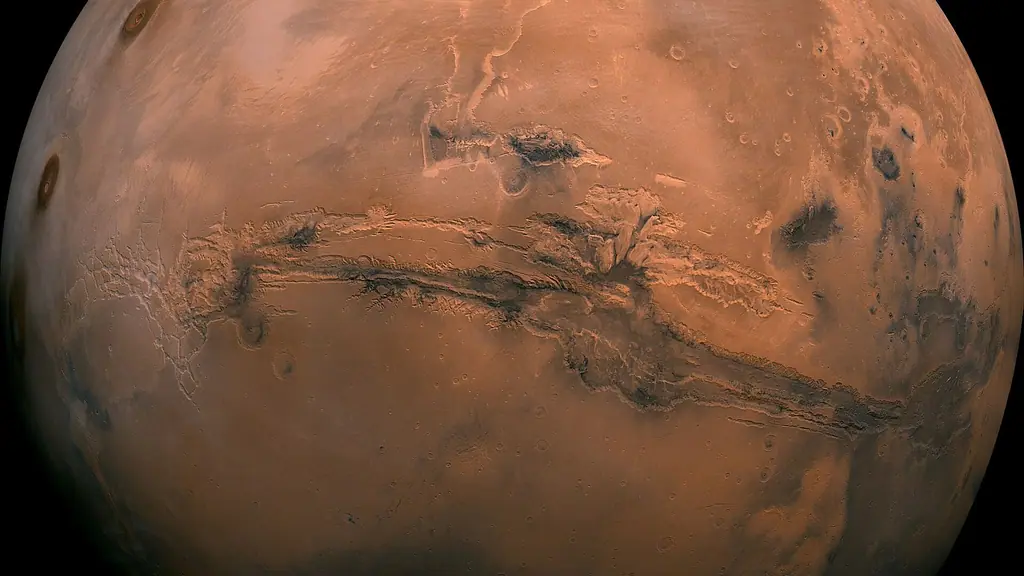
For example, NASA’s Mars facts page gives figures a story set on Mars should respect: Mars averages about 142 million miles (228 million kilometers) from the Sun, and sunlight takes roughly 13 minutes to reach it. A Martian day, called a sol, lasts about 24.6 hours, and a Mars year is 687 Earth days. The atmosphere is thin and mostly carbon dioxide, nitrogen and argon, and temperatures range from about 70°F (20°C) down to about −225°F (−153°C). Each fact is a story tool: a sol that runs a little longer than an Earth day might slowly scramble a colonist’s sleep, and a long year means a child born on Mars has had far fewer birthdays than a child of the same age on Earth.
Habits that save time:
- Keep a fact file. Note each fact, its source and the date you checked it.
- Research the question your story asks, not the whole subject. If your plot depends on a message delay, look up communication delays, not the history of radio.
- Mark your inventions clearly in your notes so you don’t later mistake them for facts.
- Ask a knowledgeable reader to check the science if your story leans hard on it.
Our article on the real science of space adventure settings gathers more verified facts for common settings.
Info-dumping and how to avoid it
SFE uses the term “infodump” for chunks of technical explanation dropped into a story, and notes that hard SF is especially prone to them. An info-dump stops the plot so the author can explain. A little explanation is fine; the problem is when it arrives before the reader cares.
Example
Info-dump: The colony used a closed-loop water system that recycled 98 percent of all moisture, including sweat and breath, through a series of membrane filters invented in 2140 by…
Revised: Jun licked the cup clean. Water rations were water rations, and the recycler had tasted faintly of someone else’s sweat all week.
The revision gives less information but more story: we learn water is scarce, recycled and rationed, and we learn something about Jun. (The figures in the first version are invented for the example.) Techniques that help:
- Explain only what the reader needs right now. The rest can wait, or never appear.
- Show technology in use, preferably failing. A broken machine invites explanation naturally.
- Use conflict. Two characters who disagree about how something works can explain it in an argument.
- Avoid “As you know…” dialogue, where characters tell each other things they both already know.
- Trust the reader. Science-fiction readers are used to working out unfamiliar worlds from clues.
Where young writers can enter science fiction
Publishing is not the point of writing, but a deadline and an audience can be motivating. One verified option for teens in the United States and Canada:
- Scholastic Art & Writing Awards. Its participation terms limit entry to students in grades 7–12, aged 13 or older, attending school and living in the United States, U.S. territories or military bases, or Canada (excluding Quebec). The awards have a Speculative Fiction category, previously called Science Fiction & Fantasy, for complete stories of 500–3,000 words; the rules say work must be original, not an adaptation of or sequel to published works. Check the current terms, deadlines and fees on the official site before entering.
Closer to home, school literary magazines, public library writing contests and classroom anthologies are excellent first audiences.
Note
Young writers should involve a parent, guardian or teacher before submitting anywhere. Read the rules about rights and fees, never share a home address or phone number publicly, and be wary of any “contest” or anthology that asks writers to pay to be published or to buy copies. The Science Fiction and Fantasy Writers Association runs Writer Beware, which documents questionable contests and publishers and is worth checking first.
Ready to start? Roll a premise, run it up the consequence ladder, and write the scene on rung five. For a title to aim at, try the Space Adventure Title Generator, and for reading that shows these techniques at work, browse our science fiction books for kids.
Sources
- Hard SFThe Encyclopedia of Science Fiction
- Soft SFThe Encyclopedia of Science Fiction
- InfodumpThe Encyclopedia of Science Fiction
- Mars: FactsNASA Science
- Categories (Scholastic Art & Writing Awards)Alliance for Young Artists & Writers
- Participation Terms (Scholastic Art & Writing Awards)Alliance for Young Artists & Writers