There are two ways a fictional world goes wrong. In the first, the writer spends a year on maps, royal family trees and a calendar with fourteen months, and never writes chapter one. In the second, the story begins at once, but the world is painted scenery: the city has no farms to feed it, the empire has no reason to exist, and the magic solves whatever problem turns up.
This guide is for anyone trying to land between those two failures: teen writers starting a first fantasy or science-fiction project, adults returning to a long-planned novel, and teachers running a worldbuilding unit. You will build a world in five layers (geography, history, culture, technology and conflict), and at every layer you will ask the same question: what does my story actually need?
By the end you will have a one-page world sheet, a rough map, a naming plan and a set of consistency notes you can keep beside you while you draft.
Start with the story, not the atlas
Worldbuilding works best when it follows the pressure of a plot. Begin with a one-sentence premise and let it tell you which parts of the world need detail.
Take this premise: A twelve-year-old water-runner on a dry moon discovers that the colony’s ice mine is nearly empty. Before drawing anything, list the questions that sentence forces on you:
- Why does the colony depend on mined ice? (Geography.)
- Who controls the mine, and how did they get that power? (History and politics.)
- What does a water-runner do all day, and who respects them? (Culture.)
- What technology keeps people alive, and what happens if it fails? (Technology.)
- Who benefits from keeping the shortage secret? (Conflict.)
Those five questions are your build list. Everything else, such as the moon’s founding myths or the second language spoken in the outer domes, can wait until a scene asks for it.
Key idea
The iceberg principle. Readers see the tip; you know a little of what lies underneath. Build enough below the surface that the visible part floats convincingly, but do not haul the whole iceberg onto the page. A detail earns its place when it changes what a character can do, wants or fears.
Layer 1: Geography and the sky above it
Land decides where people can live, how they travel and what they fight over. Rivers become trade routes; mountain ranges become borders; a single pass through the hills becomes the most valuable place in the kingdom.
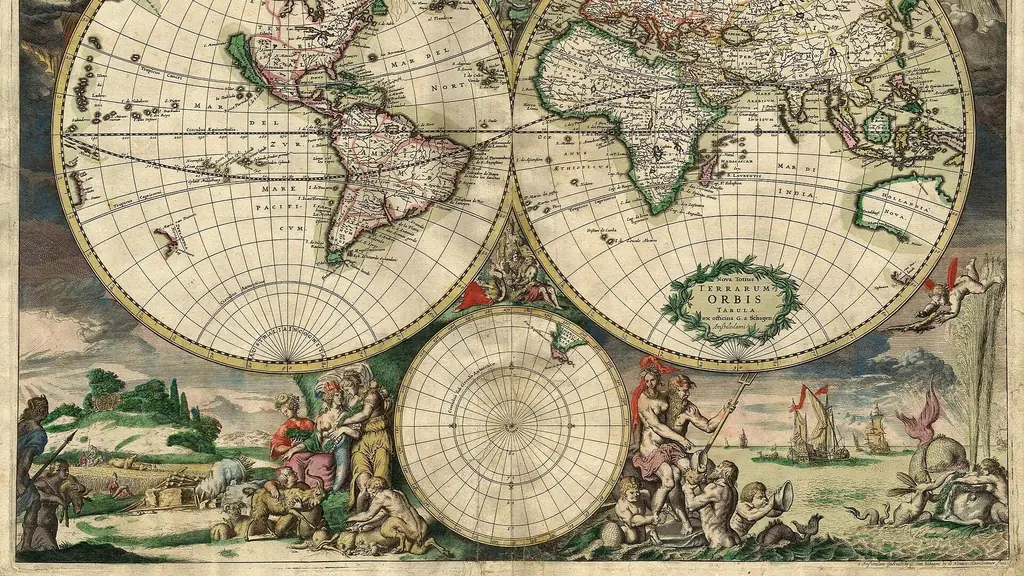
Sketch a working map early. It does not need to be beautiful. National Geographic’s guide to maps describes the parts that make a map readable, including a legend (or key) explaining the symbols, a scale relating map distance to real distance, and an orientation arrow showing which way is north. Those three features are exactly what a writer needs. A scale bar stops a journey from taking three days in chapter two and three weeks in chapter nine. A legend forces you to decide what the symbols mean, which is a quiet way of deciding what matters in this world.
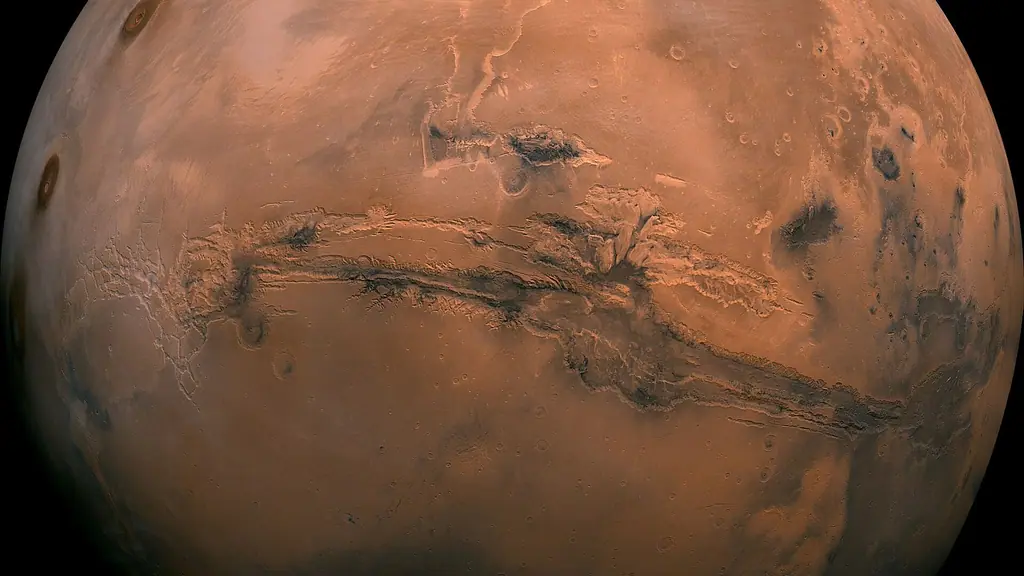
If your world is another planet, borrow from real science. NASA describes the habitable zone as the range of distances from a star where liquid water could exist on a planet’s surface. That zone sits closer to small, dim stars such as red dwarfs, and NASA notes that red dwarf flares and radiation could make nearby planets harsh places to live. A story set on such a world might give its people a reason to live underground or to fear the sky.
Seasons are another easy win. NASA’s Space Place explains that Earth’s seasons come from the tilt of its axis, not from how close it is to the Sun. A world with a stronger tilt could have more extreme seasons; you can decide what that means for harvests, travel or school calendars without needing to calculate anything.
Layer 2: History, or why things are the way they are
History is the explanation behind every present-day problem. You do not need a thousand-year timeline. You need three to five past events that still shape daily life.
For each event, write one line about what happened and one line about what it left behind:
| Past event | What it left behind |
|---|---|
| The first colony ship crash-landed | The crash site is sacred ground; nobody builds there |
| The ice mine was sold to a private company | Mine managers outrank elected councilors |
| The Dust Year killed half the crops | Older people hoard dried food; younger people mock them for it |
The right-hand column is where stories live. A character who hides food in a wall cavity because of the Dust Year tells readers more about your history than a page of dates.
Layer 3: Culture and everyday life
Culture is how people eat, dress, greet each other, celebrate, grieve, argue and joke. Readers believe in a world when they see it at the level of a breakfast table.
Useful questions for any group in your world:
- What do people eat on an ordinary day, and on a special one?
- What counts as rude? What counts as brave?
- Who is allowed to make decisions, and who quietly makes them anyway?
- What do people disagree about? (Every real culture contains arguments, generations and dissenters; a world where everyone in a nation thinks the same feels flat.)
Example
At the water-runners’ hall, nobody says “thank you” for a delivery. You tip the canister slightly toward the runner before you take it, so they can see it is still sealed. Hevi had done it a thousand times. Today the seal was already broken.
Borrowing from real cultures with care
Many great fictional worlds draw on real places and traditions. The difficulty comes when a writer lifts sacred practices, clothing or names from a living culture and uses them as decoration, or reduces a real people to a single stereotype. A few habits help:
- Research beyond the surface. Read histories and first-person accounts written by people from that culture, not just travel images.
- Avoid copying sacred or ceremonial practices into a fictional setting, especially as exotic flavor for a villain or a marketplace scene.
- Mix and transform. Let influences combine with your own invention so that the result belongs to your world, rather than renaming a real nation.
- Give every culture depth. If a group appears in your story, show its ordinary people, internal disagreements and humor, not only its warriors or mystics.
- Ask for readers. When you write closely about a culture that is not your own, a thoughtful reader from that background can catch mistakes you cannot see.
Layer 4: Technology and magic
Whether your world runs on starships or spellbooks, the rule is the same: abilities need limits and costs. If a teleporter can fix any problem, there is no problem worth reading about.
For each major technology or magic system, decide three things: what it can do, what it cannot do, and what it costs (in money, energy, health, time or something stranger). Then follow the ripples. One invention rarely changes only one thing.
| Invention | First ripple | Second ripple |
|---|---|---|
| Cheap water recycling | Mined ice becomes less valuable | Mine owners lobby to ban recyclers |
| Weather magic needs a spoken name | Children’s true names are kept secret | Name-stealing becomes a crime |
The second ripple is usually where plot hooks appear.
Layer 5: Conflict, where the world pushes back
A world becomes a story when something in it is under strain. Look back at your layers and find the pressure points: a resource running out, a border in dispute, a belief that the young no longer share, a technology that only the wealthy can afford.
Then tie at least one pressure point directly to your main character. Hevi, the water-runner, is not just watching the ice shortage from a distance; her job, her family’s rations and her trust in the adults around her all depend on it. When the world’s problem and the character’s problem are the same problem, every worldbuilding detail starts doing double duty.
Naming and consistency notes
Names. Readers learn a world partly through its sounds. Choose a small family of sounds for each culture (perhaps soft l and v sounds for one group, hard k and t sounds for another) and stick to it. The Encyclopedia of Science Fiction notes that J. R. R. Tolkien invented his imaginary languages before writing The Lord of the Rings. That is an extraordinary level of commitment, and you do not need it. A short list of sound rules, a few common word endings and a handful of place names will make most worlds feel coherent. The Character Name and Traits Generator and the Treasure and Artifact Name Generator are useful when you need raw material to shape.
Consistency notes. Keep a simple “world bible”: one document, a few headings, updated as you draft. Record anything a reader might notice if it changed.
- Distances and travel times (with your map’s scale)
- Names, spellings and who is related to whom
- Rules and costs of technology or magic
- Calendar: days, seasons, holidays
- Who knows which secrets, and when they learned them
Two lines per entry is enough. The goal is to stop contradictions, not to write an encyclopedia.
Try this
A 30-minute world. Write a one-sentence premise. List the five questions it forces (one per layer). Answer each in no more than three sentences. Sketch a map with a legend and a scale bar. Finish by writing a 150-word scene in which a character does an ordinary daily task that shows one of your answers without explaining it.
When your world sheet is done, test it against the 60 worldbuilding questions, then turn to describing a setting on the page so all that hidden work shows up as vivid, selective detail. If you are building a science-fiction setting, the Sci-Fi World Generator can give you a starting planet to question and reshape, and the guide to writing science fiction covers what to do with it next.
Sources
- The Habitable ZoneNASA Science
- What Causes the Seasons?NASA Space Place
- MapNational Geographic Education
- LinguisticsThe Encyclopedia of Science Fiction