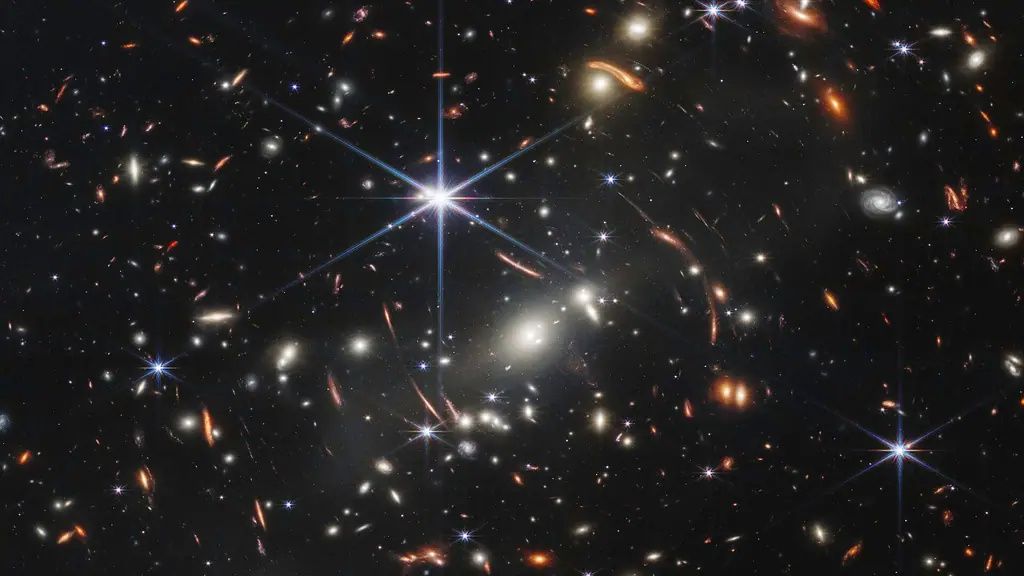
The best science fiction premises start with something true. A real fact gives a story weight and hands you problems you would never invent: a sky red with dust, a sea of liquid methane, a moon that sprays its ocean into space. The story then asks what the fact cannot answer: what would it be like to live there, and what would it cost?
This list is for teen and adult writers, and for teachers planning science-linked writing projects. Each premise is paired with the real science behind it, and each section ends with NASA or NOAA pages for further research. The science notes were checked against those pages; the story ideas are inventions, so bend them however you like.
Mars
Mars rotates once every 24.6 hours (a day called a sol), but its year lasts 687 Earth days. Its atmosphere is thin and made mostly of carbon dioxide, nitrogen and argon, and temperatures range from about 20°C down to about −153°C.
- A colony’s solar farm is buried by a dust storm that won’t clear. NASA notes that Martian dust storms can cover much of the planet and that the dust can take months to settle.
- A child born on Mars celebrates her first birthday at nearly two Earth years old. One Mars year is 687 Earth days.
- Climbers attempt the first ascent of Olympus Mons and find someone got there first. It is the largest volcano in the solar system, more than 25 miles tall from base to summit.
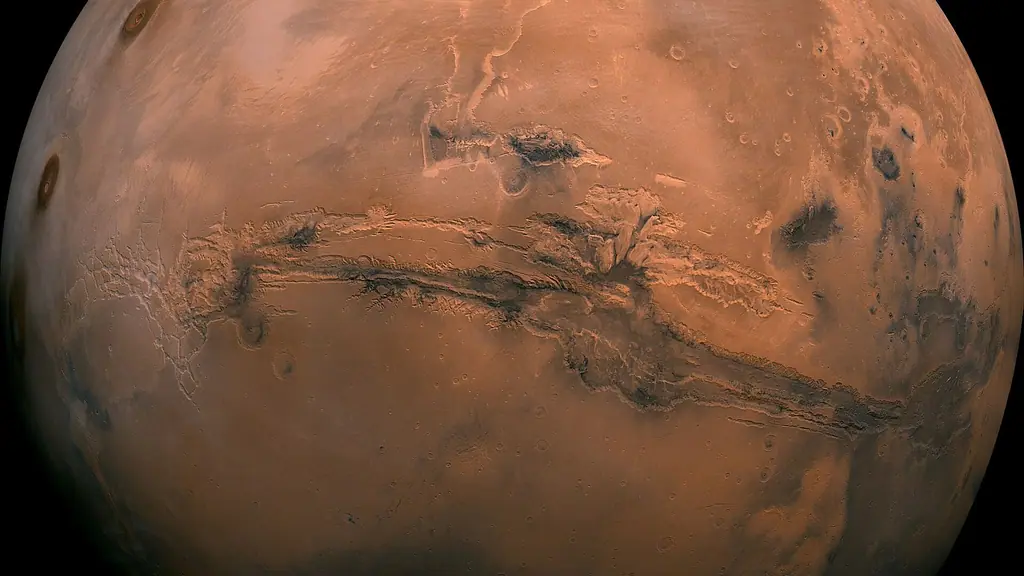
- A canyon search-and-rescue team works a gorge long enough to stretch from California to New York. Valles Marineris runs about 2,400 miles.
- A prospector stakes a claim on polar ice and is offered a fortune for it. Water ice lies just under the surface in Mars’s polar regions.
- Settlers argue over whether to build under the surface or behind shields. Mars has no global magnetic field today, and NASA notes its thin atmosphere offers little protection from impacts.
- A geologist reads an ancient Martian riverbed like a diary. River valleys, deltas and lakebeds point to a wetter past; the crater Perseverance explores once held a lake.
- The first breath of oxygen made on Mars becomes a family heirloom. Perseverance’s MOXIE experiment produced oxygen from the carbon dioxide in the Martian air.
Research it: Mars facts and the Perseverance mission.
Ocean moons and Titan
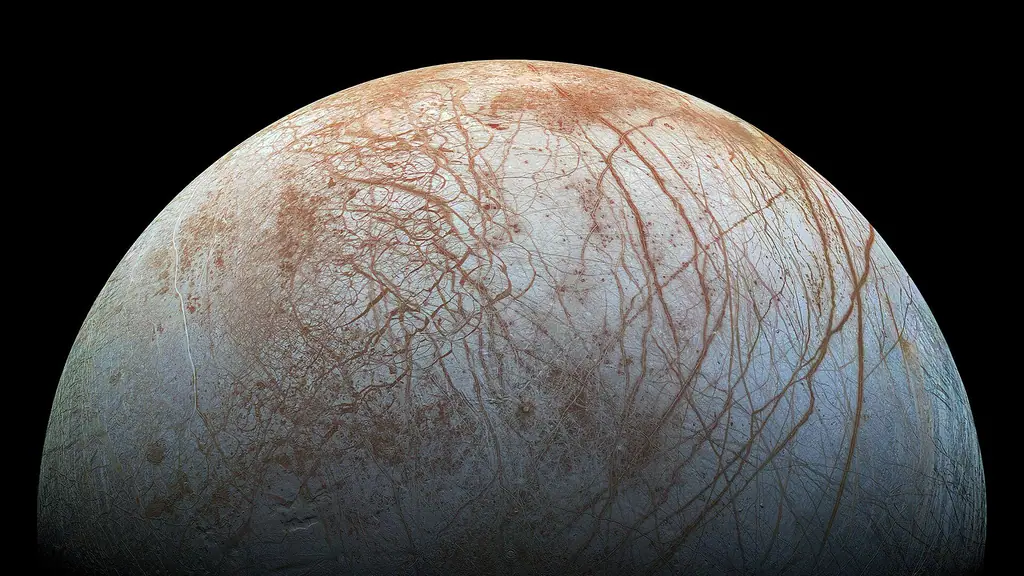
Several outer-planet moons appear to hide liquid water under their ice. NASA calls Europa one of the most promising places in the solar system to look for environments that could support life.
- A probe’s quiet mission to an ice moon gets a reply. Europa’s ocean may hold more than twice as much water as all of Earth’s oceans combined.
- Mission controllers wait out a five-and-a-half-year cruise and then 49 chances to get it right. Europa Clipper launched in October 2024, is due at Jupiter in April 2030, and plans 49 close flybys of Europa.
- A pilot flies through a geyser to catch a sample and catches something else. Enceladus erupts plumes of ice and gas at roughly 800 miles per hour, and Cassini flew through them.
- Drillers race to reach an ocean under ice only a kilometer thick. Enceladus’s ice shell may be as thin as about 1–5 km at the south pole.
- A biologist finds what looks like a hydrothermal vent on a moon of Saturn. Silica grains from Enceladus suggest hot water reacting with rock, and NASA says the moon likely has hydrothermal vents.
- On Titan, a rain of methane ruins an outdoor wedding. Titan has an Earth-like liquid cycle, but with methane: clouds, rain, rivers, lakes and seas.
- A rotorcraft hops between landing sites on a world where the ground sits at −179°C. NASA’s Dragonfly rotorcraft is scheduled to launch in 2028.
- Two oceans on one moon, and the people on the surface don’t know about the second. Measurements suggest Titan hides a water ocean 55–80 km under its icy crust.
Research it: Europa Clipper, Enceladus, Titan facts and Dragonfly.
Exoplanets
NASA has confirmed more than 6,000 planets orbiting other stars and estimates there are billions. One common way to find them is to watch for the slight dip in starlight as a planet passes in front of its star.
- An astronomer notices a dip in starlight with an impossible pattern. The transit method finds planets by measuring that dip.
- Seven worlds, one small star, and three families who each claim the best one. TRAPPIST-1, about 40 light-years away, has seven rocky planets; three (e, f and g) lie in its habitable zone.
- The planet everyone hoped had air turns out to be bare rock. Webb found little evidence of an atmosphere on TRAPPIST-1b.
- A generation ship to the nearest known exoplanet changes course halfway. Proxima Centauri b, about 4 light-years away, is the closest known exoplanet.
- On a world with an 11-day year, birthdays come round every week and a half. Proxima b completes an orbit in about 11.2 days.
- A starless wanderer drifts into a solar system, carrying passengers. Rogue planets float free, bound to no star.
- Explorers land on a lava world and must stay on the night side. NASA’s list of exoplanet types includes lava worlds and very low-density “puffy” planets.
Research it: Exoplanets, TRAPPIST-1 and Proxima Centauri b.
Asteroids, the Moon and deep space
- A planetary defense team gets one shot at nudging a rock. NASA’s DART spacecraft deliberately struck the small asteroid moon Dimorphos in September 2022 to demonstrate one way of deflecting an asteroid.
- Miners arrive at a metal asteroid that might be the core of a planet that never finished forming. NASA’s Psyche mission targets a metal-rich asteroid in the main belt, arriving by 2029.
- A grain of asteroid dust holds a message nobody expected. OSIRIS-REx returned 121.6 grams of asteroid Bennu to Earth in 2023; studies report evidence of a saltwater past.
- The night an asteroid passes close, a small town watches together. Asteroid Apophis makes a close approach to Earth in 2029, and NASA plans a follow-on mission to study it.
- A crater at the Moon’s south pole that has never seen sunlight holds a frozen secret. NASA describes ancient ice hidden in permanently shadowed craters.
- A deep-space probe’s golden record is answered. Each Voyager carries a golden record; Voyager 1 entered interstellar space in 2012 and Voyager 2 in 2018.
- A message sent from the edge of the solar system takes a full day to arrive. Voyager 1 is more than 16 billion miles away, about a light-day from Earth.
- A comet falls inward from a cloud nobody has ever seen. NASA has no direct images of the Oort Cloud, the vast region of icy objects beyond Pluto.
Research it: DART, Psyche, OSIRIS-REx, the Moon, Voyager and the Oort Cloud.
The Sun and space weather
- A solar storm turns off the lights in a city for a week. Coronal mass ejections can induce currents that damage power-grid transformers.
- Satellites start falling, slowly, and nobody can stop them. Solar activity heats the upper atmosphere, increasing drag so satellites lose altitude.
- A polar flight crew is warned of a radiation storm mid-route. High-speed solar particles pose risks to astronauts and to crews on high-flying polar aircraft.
- Auroras appear over a desert town for the first time in living memory. Particles from coronal mass ejections create the northern and southern lights.
Research it: Solar storms and flares.
Artificial intelligence and robots
- A rover picks its own target, and its choice embarrasses the science team. Perseverance’s AEGIS software ranks rocks in its camera images and chooses targets for its laser itself, without waiting for operators on Earth.
- An explorer robot has to decide alone, because help is too far away to ask. Rovers on Mars can’t be steered in real time from Earth; AEGIS was developed so they can act between commands.
- A tiny helicopter becomes the most famous pilot on Mars, and the loneliest. Ingenuity, the first aircraft to make a powered, controlled flight on another planet, flew 72 times.
- A colony’s maintenance AI keeps a secret to protect the colonists. Pure invention: use it to ask what we want machines to tell us.
- A sample-collecting robot is left alone for decades and starts curating. Perseverance collects and caches rock samples for possible return to Earth.
Research it: Perseverance now selects its own targets.
Climate and the oceans
- A shellfish farmer watches her harvest thin year by year and goes looking for the cause. The ocean absorbs about 30% of the carbon dioxide released into the atmosphere, and surface water has become about 30% more acidic since the industrial revolution.
- A diver returns to her childhood reef and finds it white. Corals expel the algae living in their tissues when stressed, and warmer water is a common trigger; corals can recover if the bleaching is not severe.
- A coastal town votes on whether to move inland. Global sea level rose about 8 inches in the last century.
- An ice-sheet scientist is stranded on Greenland during a record melt. Greenland lost an average of 279 billion tons of ice per year from 1993 to 2019.
- A mapping ship charts a seafloor no human has seen and finds a structure. As of April 2026, only 28.7% of the global seafloor had been mapped with modern sonar.
- A marine biologist names a new species every week and runs out of names. NOAA estimates about two-thirds of ocean species may be undiscovered or undescribed.
Research it: Ocean acidification, coral bleaching, climate evidence and ocean exploration.
Biology at the edges
- A deep-sea station runs on the same chemistry as the creatures outside its windows. Life at hydrothermal vents runs on chemosynthesis: microbes convert chemicals in the water into energy, without sunlight.
- A submersible pilot finds a vent field no map has recorded, and it is not empty. Hydrothermal vents were first discovered near the Galápagos Rift in 1977.
- Tubeworms the length of a person grow around a crashed submersible. Giant vent tubeworms can reach almost five feet in under two years.
- Twins, one in orbit and one on the ground, compare notes for a year. NASA’s Twins Study compared astronaut Scott Kelly, who spent nearly a year on the space station, with his identical twin Mark on Earth.
Research it: Life on a vent and the NASA Twins Study.
Turning a premise into a story
A premise gives you a world and a problem. The story still needs a person who wants something.
- Find the human cost. Who is hurt or changed by this fact? Premise 41 becomes a story when the farmer may lose her grandmother’s business.
- Get the science right, then wear it lightly. Put one or two true details in a scene; keep the rest in your notes.
- Ask “and then what?” three times. The third answer is often the story.
- Make one big leap on purpose. Readers accept it if everything around it is solid.
Writer’s tip
Keep a two-column note for every sci-fi story: “What is true” and “What I made up.” If the second column gets longer than the first, your world may need more anchoring.
For craft, see how to write science fiction and the real science behind space-adventure settings. The sci-fi world generator can rough out a setting around any of these premises, and the space adventure title generator will name the result.
In the classroom
For grades 6–12, pair this list with a science lesson. Each student picks a premise, reads the linked page and writes one scene with at least two accurate facts, which a partner checks before sharing.
Sources
- Mars: FactsNASA Science
- Europa ClipperNASA Science
- EnceladusNASA Science
- ExoplanetsNASA Science
- Ocean acidificationNational Oceanic and Atmospheric Administration
- How much of the ocean has been explored?NOAA Ocean Exploration