An idea is not yet a story. “A lighthouse keeper finds a message in a bottle” is a situation; it becomes a story only when someone wants something, something stands in the way, and something changes. That gap between premise and plan is where most short stories stall, so this article gives you both halves: 60 starting points, and a worked walk-through that turns one of them into a plan you could draft tonight.
The ideas are written for teen and adult writers, and most work for confident younger writers too (a teacher can pick and adapt). They are grouped by flavor rather than strict genre. Borrow freely, change everything, and combine two if one feels thin.
Everyday life, slightly tilted
- A grandmother’s recipe card has one ingredient nobody can identify, and the family reunion is on Saturday.
- Two neighbors who have not spoken in years are the only people awake during a citywide blackout.
- A teenager working a summer job at a car wash keeps finding the same car, cleaner each time.
- Someone moves into a new apartment and finds the previous tenant’s unfinished letters to a person who lives across the street.
- A school bus driver on her last day before retirement takes a different route.
- The quietest kid in class is chosen to give the speech at a funeral for the school’s beloved goat.
- A man returns a library book 30 years late and the librarian remembers him.
- Twins swap places for one afternoon and discover their parents treat them very differently.
- A small-town radio host announces, on air, that tonight is the station’s final broadcast. The phones start ringing.
- A girl is paid to walk an elderly neighbor’s dog, but the neighbor does not own a dog.
Mystery and secrets
- Every clock in a village stops at the same minute, and only one person seems relieved.
- A detective who has never solved a case is the only witness to a theft.
- A museum guard notices that one painting changes very slightly every night.
- A child’s imaginary friend gives information that turns out to be true.
- During a power cut at a wedding, the ring disappears from a locked box.
- A crossword in the local paper starts containing clues only one reader could understand.
- A boarding school student finds her own name carved inside an old desk, dated 1952.
- The new kid knows the combination to every locker in the school.
Fantasy and folklore
- A troll who guards a bridge is told the bridge is being replaced by a modern one.
- The youngest of three siblings is sent on the quest, but only because the older two are busy.
- A witch runs a small shop selling weather by the jar, and a farmer wants to buy a drought for his rival.
- A dragon’s hoard is being audited.
- A girl can hear what objects remember, and her new school is very old.
- Every hundred years a door appears in a hill. This time the person who walks through is a tax inspector.
- A ghost wants help finishing her homework from 1890.
- A shapeshifter has been a cat for so long she has forgotten what she was before.
Science fiction
- The last human on a generation ship has to convince the crew of robots that the destination is real.
- A Mars colony holds its first election, and the only candidate is the colony’s operating system.
- A message from deep space turns out to be an apology.
- A memory-editing service offers a discount on forgetting one specific person.
- A boy builds a robot to do his chores, and it starts doing everyone else’s too.
- Earth receives a delivery of seeds from a planet that should not have plants.
- A time traveler arrives with urgent news, but she is from only ten minutes in the future.
For 50 more premises built on real science, see science fiction story ideas.
Gently spooky
- A family’s new house comes with a rule written on the cellar door: “Knock before entering.”
- A night-shift baker notices loaves rising in the shapes of letters.
- Every photograph a girl takes includes the same stranger in the background, getting closer.
- A camp counselor tells the usual campfire story, and someone in the woods finishes it.
- A town’s scarecrows are moved, one field closer, every morning.
- An answering machine keeps recording messages from last winter.
Adventure and survival
- A delivery pilot crash-lands on a glacier with a cargo of birthday cakes.
- Two rival hikers must share one tent through a three-day storm.
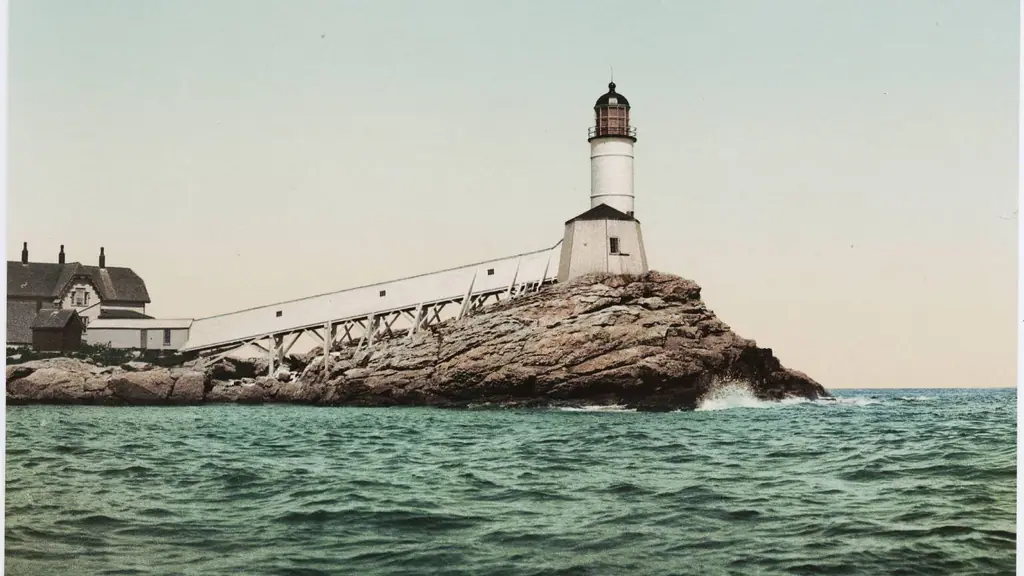
- A lighthouse keeper on a remote island hears a radio call from a ship that sank decades ago.
- A family’s canoe trip goes wrong when the youngest is the only one who can read a map.
- A girl races to deliver medicine across a frozen lake before the ice breaks up.
- A city flood leaves three strangers stranded on a rooftop with a dog that belongs to none of them.
- A treasure map is genuine, but the treasure turns out to be a person.
Funny
- A superhero’s only power is always knowing where the TV remote is.
- The class hamster runs for student council, and it is polling well.
- A knight is sent to rescue a princess who has already rescued herself and would like some privacy.
- An alien invasion is delayed because the invaders cannot agree on a parking spot.
- A wizard’s apprentice accidentally turns the school principal into a very small, very angry teapot.
- A grandpa joins a teenage band and is, unfortunately, the best musician in it.
From the archive
Historical photographs, posters and maps make excellent idea fuel because the details are real and specific. The Library of Congress gathers free-to-use images into themed sets, over a hundred of them on topics as different as dragons, shoes, aircraft, jazz and classic children’s books. Pick one picture and ask what happened five minutes later.
- Find a photograph of a crowd. Choose one face at the edge and write the day from that person’s point of view.
- Pick an old advertisement and write a story about the person who made the product.
- Choose a picture of an early aircraft and write the night before its first flight.
- Find a photo of an empty street and decide why everyone left.
- Pick a portrait of a child from long ago and write their best day.
- Find an old map and invent the argument that led to one border being drawn.
- Choose a photograph of a musician and tell the story of the song that never got recorded.
- Pick any object in a photo’s background and make it the most important thing in the story.
Writer’s tip
If a premise feels thin, combine it with another. Number 21 (weather by the jar) and number 41 (rival hikers sharing a tent) make a stronger story together than either does alone.
How to develop one idea into a plan
Here is one premise taken from list to plan, step by step. The method works for any of the 60.
The premise: number 42, a lighthouse keeper on a remote island hears a radio call from a ship that sank decades ago.
Step 1: Ask whose story it is
Purdue’s Online Writing Lab notes that instructors in fiction workshops, from beginning to advanced levels, often ask “Whose story is this?”, because character is the most important aspect of fiction. The answer here could be the keeper, but it is more interesting to give the keeper a reason to care. Let’s say the keeper is Ines, 61, whose father was a crew member on the sunken ship. She took the lighthouse job forty years ago partly to be near the place he was lost.
Step 2: Give her a want and an obstacle
Ines wants to know what really happened to her father’s ship. The obstacle is that the radio calls come only in storms, the coast guard thinks she is imagining them, and the supply boat arrives tomorrow with her replacement. She has one night.
Step 3: Build a chain of cause and effect
The Purdue OWL describes plot as a chain reaction, a sequence in which events cause other events. Write the chain as “because” and “so” rather than “and then”:
- The storm hits, so the radio crackles to life.
- The voice gives a position, so Ines takes the small boat out, against every rule.
- She finds nothing at the position, so she starts to doubt herself, until the voice speaks again, using her childhood nickname.
Step 4: Shrink the scope
A short story cannot hold forty years. The Purdue OWL’s guide to common pitfalls warns that beginning writers often struggle with scope and suggests starting in the middle of the action. So the story covers only the final night, and the forty years arrive as details: a framed photo, a worn logbook, the habit of saying goodnight to the sea.
Step 5: Choose the turn and the ending
Every short story needs a moment where something shifts for good. Options for this one:
- Resolved: the voice belongs to a real radio operator on a fishing boat in trouble, and Ines saves him, finally doing for someone what nobody could do for her father.
- Open: the voice stops, and Ines decides whether to tell her replacement.
- Ironic: the voice is her own, recorded on an old tape her father made, which has been playing in a drawer every storm for decades.
Each ending makes it a different story. Pick the one that answers the question the opening raised.
The one-paragraph plan
On her last night as keeper, Ines hears the voice from her father’s lost ship again and takes the boat out into the storm to find it. At the position the voice gives, she finds a fishing boat sinking, with a young radio operator who has been calling for help on an old frequency. She brings him back. In the morning she tells her replacement about the voices and leaves the radio switched on.
That paragraph is enough to start drafting. For help shaping the middle, plot structure explained compares the main models, and how to write a short story takes a draft from first line to revision.
Choosing the right idea for you
A good idea for you is one that makes you curious. A few quick tests:
- Can you picture a scene? If you can see one moment clearly, you have a way in.
- Is someone in trouble? Purdue’s guide to fiction points out that conflict depends on character, because readers care about the outcomes of people’s lives.
- Is it small enough? A short story usually needs one main problem and a handful of characters.
- Does it surprise you? If the ending is obvious from the premise, change one element.
When none of the 60 fits, the story idea generator combines heroes, goals, obstacles and twists you can lock and re-roll, and how to create a fictional character helps when the premise is strong but the person at its center is still blurry.
Try this
Pick three ideas from different sections. For each, write one sentence that names the main character, what they want and what stands in the way. Read the three aloud and draft the one you most want to know the ending of.
Sources
- Fiction BasicsPurdue Online Writing Lab
- Common Pitfalls for Beginning Fiction WritersPurdue Online Writing Lab
- InventionPurdue Online Writing Lab
- Library of Congress Free to Use and ReuseLibrary of Congress